Preparing students for the California CAASPP assessment can be challenging. By the time testing season arrives, many students are already feeling burned out from endless worksheets and repetitive review packets. Teachers want meaningful practice that builds confidence without making students dread test prep.
The good news is that preparing students for the CAASPP or Smarter Balanced (SBAC) assessment doesn’t have to mean more worksheets.
One of the most effective ways to increase engagement while still providing rigorous reading practice is by using high-quality reading task cards. When designed to mirror the rigor of the assessment, task cards provide students with authentic reading practice while giving teachers incredible flexibility in how they use them.
If you’re looking for a ready-to-use activity, I’ve created a FREE set of CAASPP & SBAC Reading Task Cards that you can download here:
👉 FREE CAASPP & SBAC Reading Task Cards
https://www.teacherspayteachers.com/Product/FREE-SBAC-CAASPP-Test-Prep-Short-Story-with-Questions-Reading-Task-Cards-ELA-6596133
Now let’s look at why task cards continue to be one of the most effective classroom tools for preparing students for state testing.
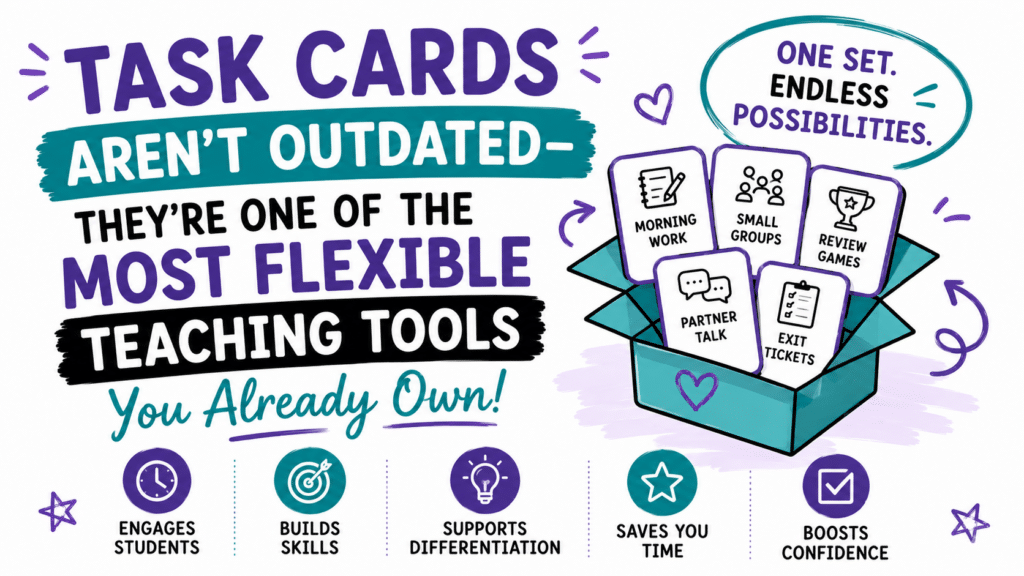
Task Cards Aren’t Outdated—They’re One of the Most Flexible Teaching Tools You Already Own
Sometimes teachers hear the phrase “task cards” and immediately picture students quietly answering questions at their desks.
But task cards aren’t an activity.
They’re a format.
One well-designed set of reading task cards can become dozens of engaging classroom activities.
Instead of asking, “How should students complete these cards?”
Ask,
“How can I use these cards today?”
That simple mindset shift completely changes how students experience test prep.
Why Reading Task Cards Work So Well for CAASPP & SBAC Test Prep
High-quality reading task cards allow students to:
✔ Practice rigorous reading skills
✔ Build confidence with assessment-style questions
✔ Strengthen text evidence skills
✔ Review multiple standards
✔ Stay engaged through movement and collaboration
✔ Receive frequent spiral review
Instead of completing one long packet, students interact with shorter reading activities that feel much more manageable.
The result?
Higher engagement.
Better participation.
More meaningful discussion.
And stronger reading skills over time.
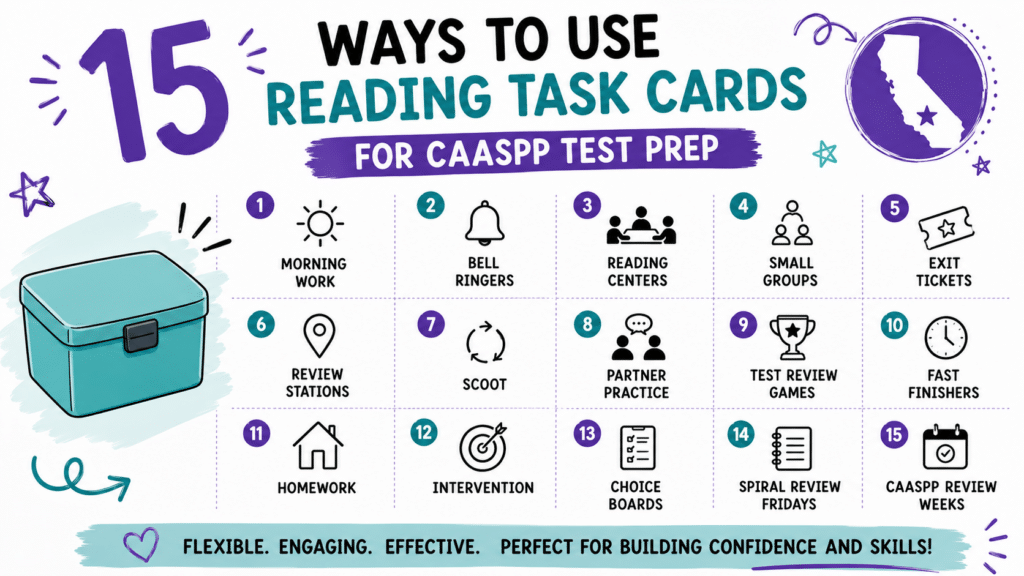
15 Ways to Use Reading Task Cards for CAASPP Test Prep
1. Morning Work
Start the day with one reading task card while students settle into class.
2. Bell Ringers
Use one question to immediately focus students on reading.
3. Reading Centers
Place task cards in literacy stations for independent practice.
4. Small Groups
Target specific reading skills during intervention or guided reading groups.
5. Exit Tickets
Check understanding before students leave class.
6. Review Stations
Create multiple stations around the room covering different reading standards.
7. Scoot
Students rotate around the room answering different task cards.
Movement keeps engagement high.
8. Partner Practice
Students discuss answers before submitting responses.
Great conversations often lead to deeper understanding.
9. Test Review Games
Turn task cards into whole-class review competitions.
10. Fast Finishers
Students who finish early continue practicing meaningful reading skills.
11. Homework
Assign one or two cards instead of an entire worksheet.
12. Intervention
Use task cards to reteach specific standards to struggling readers.
13. Choice Boards
Allow students to choose which task cards they’d like to complete.
Choice increases motivation.
14. Spiral Review Fridays
Mix standards students have learned throughout the year.
15. CAASPP Review Weeks
As testing approaches, complete a few task cards each day instead of overwhelming students with lengthy packets.
What Makes Effective CAASPP Test Prep?
Not every reading activity prepares students for state testing.
The best CAASPP practice includes:
• High-interest reading passages
• Fiction and informational texts
• Vocabulary in context
• Text evidence questions
• Inferencing
• Theme and central idea
• Author’s purpose
• Multi-step thinking
• Rigorous comprehension questions
• Standards-aligned practice
When these skills are practiced consistently throughout the year, students become much more confident readers.
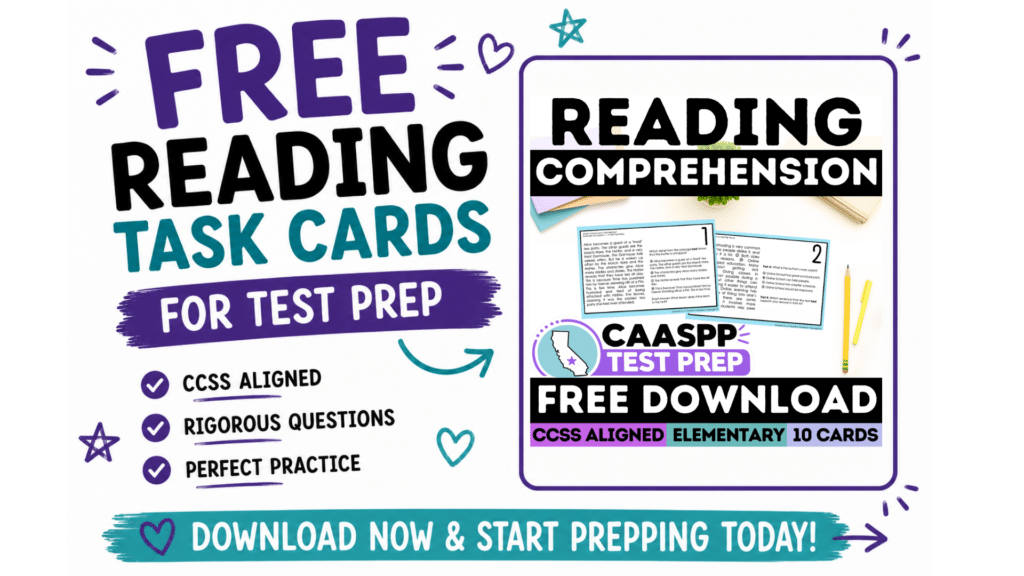
FREE CAASPP & SBAC Reading Task Cards
If you’re looking for an engaging way to introduce assessment-style reading practice into your classroom, I’ve created a FREE set of CAASPP & SBAC Reading Task Cards that mirrors the rigor students experience on state assessments.
This free resource includes:
✔ High-interest reading passage
✔ Rigorous reading comprehension questions
✔ CAASPP and SBAC-style practice
✔ Printable format
✔ Perfect for morning work, centers, intervention, review games, or homework
It’s an easy way to help students build confidence while making test prep more engaging.
👉 Download your FREE CAASPP & SBAC Reading Task Cards here:
Frequently Asked Questions
Are task cards effective for CAASPP test prep?
Yes. When the questions are rigorous and standards-aligned, task cards provide meaningful practice while keeping students engaged.
What’s the difference between SBAC and CAASPP?
SBAC refers to the Smarter Balanced assessment system. CAASPP is California’s statewide testing program that uses Smarter Balanced assessments for English language arts and mathematics.
How often should students practice before CAASPP?
Small amounts of consistent practice throughout the year are generally more effective than several weeks of intensive review immediately before testing.
Are task cards better than worksheets?
Both have value, but task cards offer greater flexibility. The same set can be used for centers, games, partner work, intervention, homework, and review activities.
What reading skills are tested on CAASPP?
Students are expected to analyze literary and informational texts, use text evidence, determine vocabulary meaning in context, make inferences, identify central ideas and themes, and explain their thinking using evidence from the text.
Can task cards be used for intervention?
Absolutely. Because task cards are short and focused, they’re ideal for reteaching specific skills in small groups.
Teacher Toolbox
Try This Tomorrow
Instead of handing students a worksheet, place six task cards around the room and let partners rotate every three minutes. You’ll cover the same rigorous skills while increasing movement, discussion, and engagement.
Free Resource
📥 FREE CAASPP & SBAC Reading Task Cards
https://www.teacherspayteachers.com/Product/FREE-SBAC-CAASPP-Test-Prep-Short-Story-with-Questions-Reading-Task-Cards-ELA-6596133
Final Thoughts
Preparing students for the CAASPP doesn’t have to mean weeks of repetitive worksheets.
With engaging, standards-aligned task cards, students can practice the same rigorous reading skills in ways that encourage discussion, movement, collaboration, and confidence.
When test prep becomes something students actively participate in—not just something they complete—they’re more likely to stay engaged, retain what they’ve learned, and approach the assessment feeling prepared.
Sometimes the best test prep isn’t doing more work—it’s making the work more meaningful.