Preparing students for the Florida FAST ELA assessment can feel overwhelming. Between teaching new reading skills, covering the Florida B.E.S.T. Standards, and fitting everything into an already busy schedule, finding time for meaningful test preparation isn’t always easy.
The good news? Students don’t need hours of extra worksheets or weeks of intensive review before testing.
In fact, one of the most effective ways to improve reading comprehension and build confidence is through short, consistent daily practice.
Just 10 minutes each day can help students become more familiar with the types of questions they’ll encounter on the Florida FAST assessment while strengthening the reading skills they use all year long.
Whether you’re teaching third, fourth, or fifth grade, here’s how daily reading warm-ups can help your students feel more confident and prepared.
Looking for a Free Florida FAST Reading Resource?
If you’re ready to add meaningful FAST test prep to your classroom without spending hours planning, I’ve created a FREE set of Florida FAST Daily Reading Warm-Ups you can start using right away.
These printable reading warm-ups are aligned to the Florida B.E.S.T. Standards and are perfect for morning work, bell ringers, literacy centers, small groups, intervention, or homework. Each activity takes about 10 minutes, making it easy to build consistent reading practice into your daily routine.
👉 Download your FREE Florida FAST Daily Reading Warm-Ups here:
https://www.teacherspayteachers.com/Product/FREE-Florida-FAST-Test-Prep-Daily-Reading-Warm-Ups-BEST-Standards-Bell-Ringers-8704262
Now, let’s look at why just 10 minutes of daily reading practice can make such a big difference in your students’ FAST scores.
What Is the Florida FAST ELA Assessment?
Florida’s FAST (Florida Assessment of Student Thinking) measures students’ progress toward mastering the Florida B.E.S.T. Standards. Instead of simply memorizing facts, students are expected to think critically about what they read, support their answers with evidence, analyze vocabulary in context, and explain their reasoning.
Students regularly encounter:
• Literary passages
• Informational texts
• Vocabulary in context
• Text evidence questions
• Main idea and central idea
• Theme
• Author’s purpose
• Character analysis
• Inferences
• Multi-step thinking
Because these skills build over time, the best preparation happens throughout the school year—not just during testing season.
Why Daily Reading Warm-Ups Work
Many teachers wait until a few weeks before testing to begin FAST review.
While dedicated review certainly has its place, research consistently shows that students retain more when they practice skills in small amounts over long periods of time.
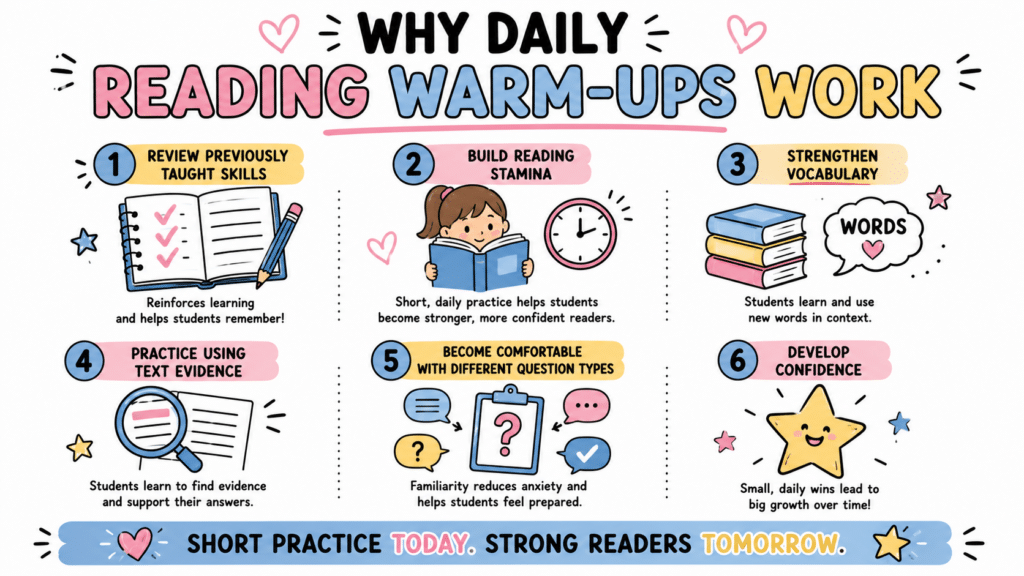
Daily warm-ups help students:
• Review previously taught skills
• Build reading stamina
• Strengthen vocabulary
• Practice using text evidence
• Become comfortable with different question types
• Develop confidence
Instead of feeling like “test prep,” these short activities simply become part of the classroom routine.
After several months, students have answered hundreds of standards-based questions without feeling overwhelmed.
The Power of Just 10 Minutes
Ten minutes may not sound like much.
But let’s do the math.
10 minutes each day
× 5 days per week
= 50 minutes of targeted reading practice every week.
Over a month, that’s more than three hours of meaningful review.
Across an entire school year, students receive dozens of hours of standards-aligned reading practice without sacrificing valuable instructional time.
Consistency beats cramming every time.
What Makes an Effective FAST Warm-Up?
Not every morning activity prepares students for the Florida FAST assessment.
The best warm-ups include:
✓ Short, manageable passages
✓ Both fiction and informational texts
✓ Standards-aligned comprehension questions
✓ Opportunities to use text evidence
✓ Multiple reading skills throughout the week
✓ Spiral review of previously taught concepts
✓ Quick completion time
Students stay engaged because the activities are focused, varied, and achievable.
Reading Skills Students Should Practice Regularly
Successful FAST preparation includes much more than answering multiple-choice questions.
Students should regularly practice:
- Making inferences
- Finding text evidence
- Determining central idea
- Identifying theme
- Summarizing
- Understanding vocabulary in context
- Analyzing characters
- Understanding author’s purpose
- Comparing texts
- Literary elements
- Point of view
- Cause and effect
- Sequencing
- Fact vs. opinion
- Context clues
- Figurative language
- Text features
- Main idea and supporting details
When these skills appear repeatedly throughout the year, students become much more confident readers.
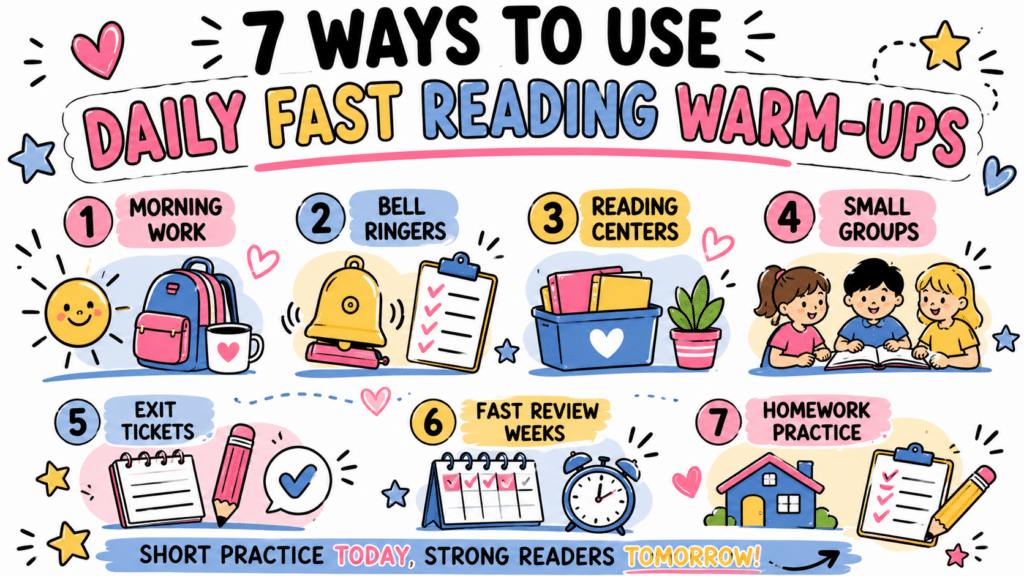
Seven Ways to Use Daily FAST Reading Warm-Ups
1. Morning Work
Start every day with a short reading passage while students settle into the classroom.
Students immediately begin thinking about reading instead of waiting for instruction to begin.
2. Bell Ringers
Middle and upper elementary teachers often use bell ringers to maximize every instructional minute.
A quick reading activity sets the tone for focused learning.
3. Reading Centers
Place a few warm-ups in literacy stations for independent review.
Students receive additional practice without requiring teacher-led instruction.
4. Small Groups
Warm-ups work well during intervention groups because they provide focused practice without taking an entire class period.
Teachers can quickly identify misconceptions and provide immediate feedback.
5. Exit Tickets
Instead of beginning class with a warm-up, use one at the end of a lesson to check understanding.
Students leave demonstrating mastery of the day’s objective.
6. FAST Review Weeks
As PM1, PM2, or PM3 approaches, use one warm-up each day as part of your review routine.
Because students are already familiar with the format, review feels natural instead of stressful.
7. Homework Practice
Need a meaningful homework assignment that doesn’t overwhelm families?
A single reading warm-up provides focused practice that can usually be completed in about ten minutes.
Build Confidence—Not Test Anxiety
One of the biggest challenges students face isn’t reading ability.
It’s confidence.
When students rarely see assessment-style questions, testing day feels intimidating.
But when students have practiced similar questions every week throughout the year, they approach the assessment knowing exactly what to expect.
That familiarity often leads to greater confidence, less anxiety, and stronger performance.
FREE Florida FAST Daily Reading Warm-Ups
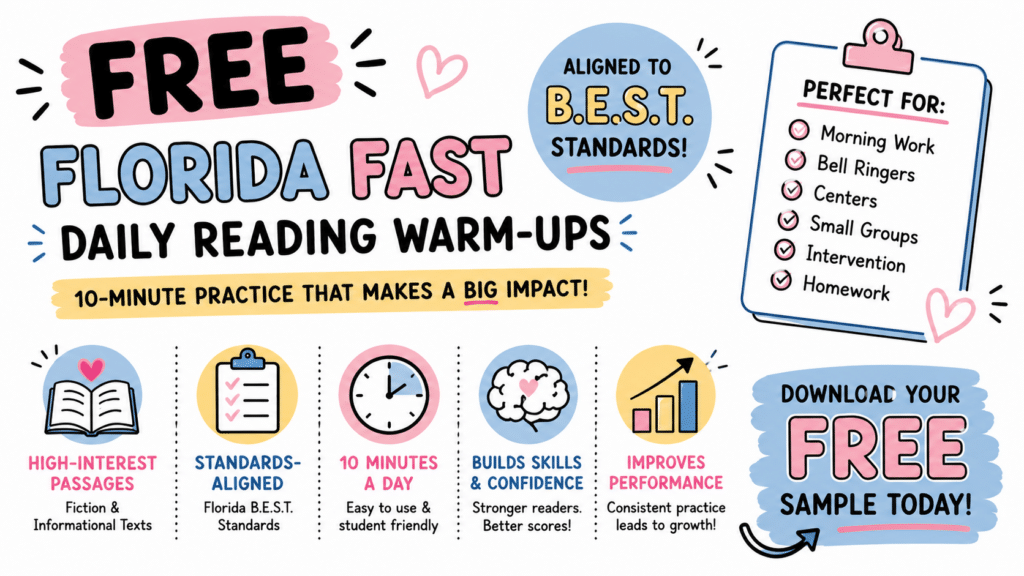
If you’re looking for an easy way to begin building this daily routine, I’ve created a FREE set of Florida FAST Daily Reading Warm-Ups designed specifically for Florida elementary classrooms.
This free resource includes:
✔ Florida B.E.S.T. Standards alignment
✔ Reading comprehension practice
✔ High-interest passages
✔ Standards-based questions
✔ Printable format
✔ Perfect for morning work, bell ringers, centers, intervention, or homework
Best of all, it only takes about 10 minutes a day.
Download your FREE Florida FAST Daily Reading Warm-Ups here:
Frequently Asked Questions
When should I start preparing students for the Florida FAST assessment?
The best time is at the beginning of the school year. Small amounts of daily review help students retain skills much better than intensive review right before testing.
How long should FAST review take each day?
Around 10 minutes is enough for consistent practice while leaving plenty of time for regular reading instruction.
Are daily bell ringers effective for FAST preparation?
Yes. Bell ringers provide repeated exposure to standards-aligned reading skills and help students become comfortable with assessment-style questions.
Do students need full-length practice tests every week?
No.
Full-length practice tests are valuable occasionally, but daily exposure to reading skills throughout the year often has a greater long-term impact.
Can I use these warm-ups for intervention groups?
Absolutely.
Because each activity is short and focused, they’re ideal for RTI, intervention, tutoring, and small-group instruction.
Final Thoughts
Improving Florida FAST ELA scores doesn’t require complicated programs or hours of additional instruction.
Instead, focus on consistency.
A simple 10-minute daily reading routine gives students repeated opportunities to practice important reading skills, strengthen comprehension, build confidence, and become familiar with the types of thinking required on the FAST assessment.
Over time, those small daily investments add up to meaningful growth.
If you’re ready to start tomorrow, grab the FREE Florida FAST Daily Reading Warm-Ups and give your students a simple, effective way to build stronger reading habits every day.
Download your FREE Florida FAST Daily Reading Warm-Ups here:
https://www.teacherspayteachers.com/Product/FREE-Florida-FAST-Test-Prep-Daily-Reading-Warm-Ups-BEST-Standards-Bell-Ringers-8704262